Researched by
Based on published specifications, independent reviews and owner reports read on October 6, 2026; not a hands-on test, and not installation advice. Wiring a battery or power system should follow the manufacturer’s manual, and a qualified installer can help if you are unsure.
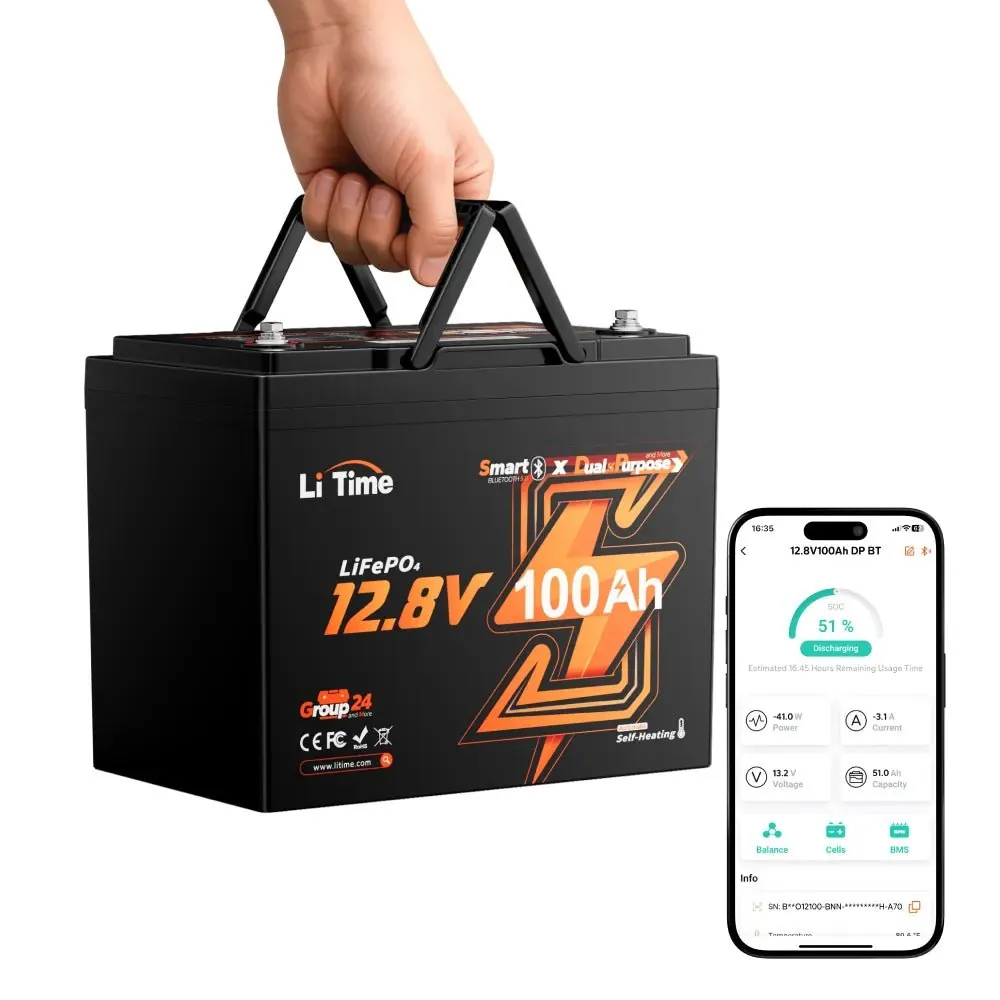
A dual-purpose lithium battery has a harder job than a house battery: it has to start an outboard or engine, then run electronics for hours. The LiTime 12V 100Ah Group 24 Dual Purpose is one of the best-known budget attempts at that, with a published cranking rating and a smart reserve that is designed to keep enough energy for the next start. Here is what the numbers mean and where the evidence is thin.
At a glance
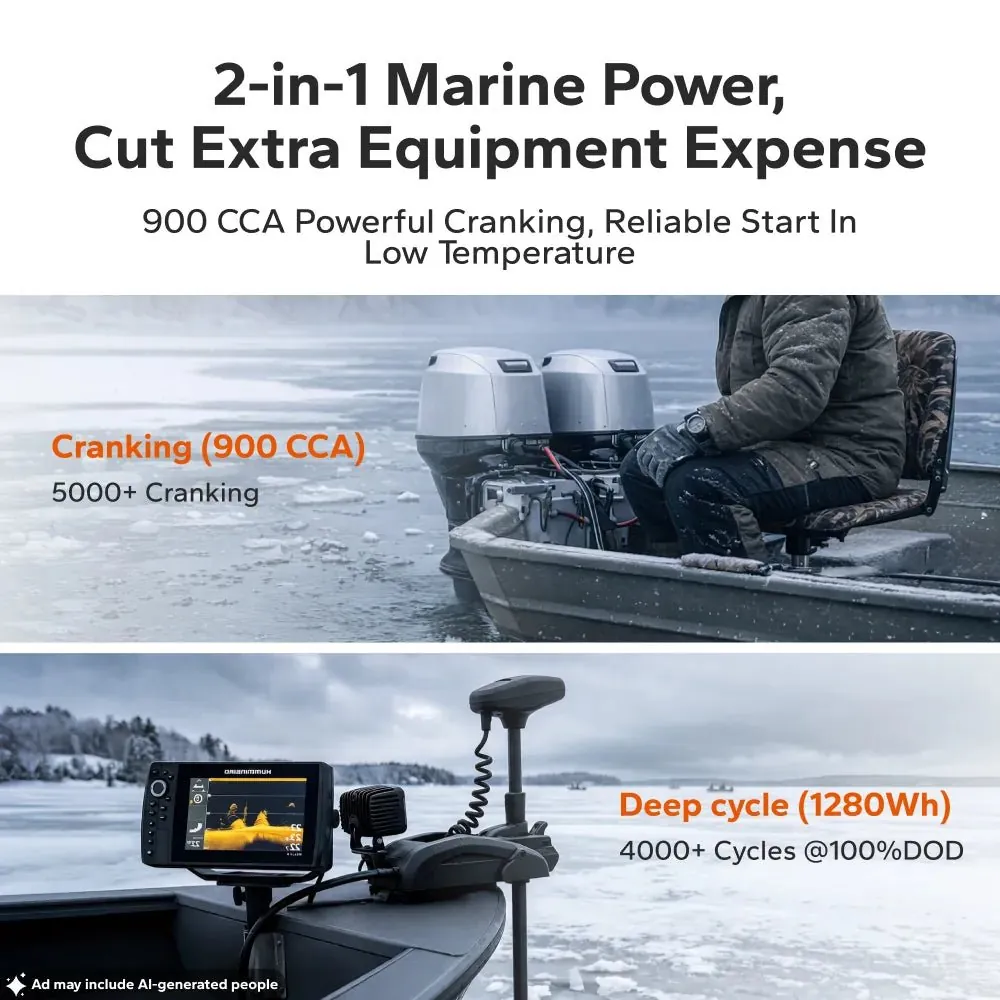
- Cranking (brand): 900 CCA at 14°F and 1,000 MCA at 32°F, from a 1,280 Wh battery.
- Cold weather: self-heating below 41°F; charging stops below 32°F and discharging stops below -4°F.
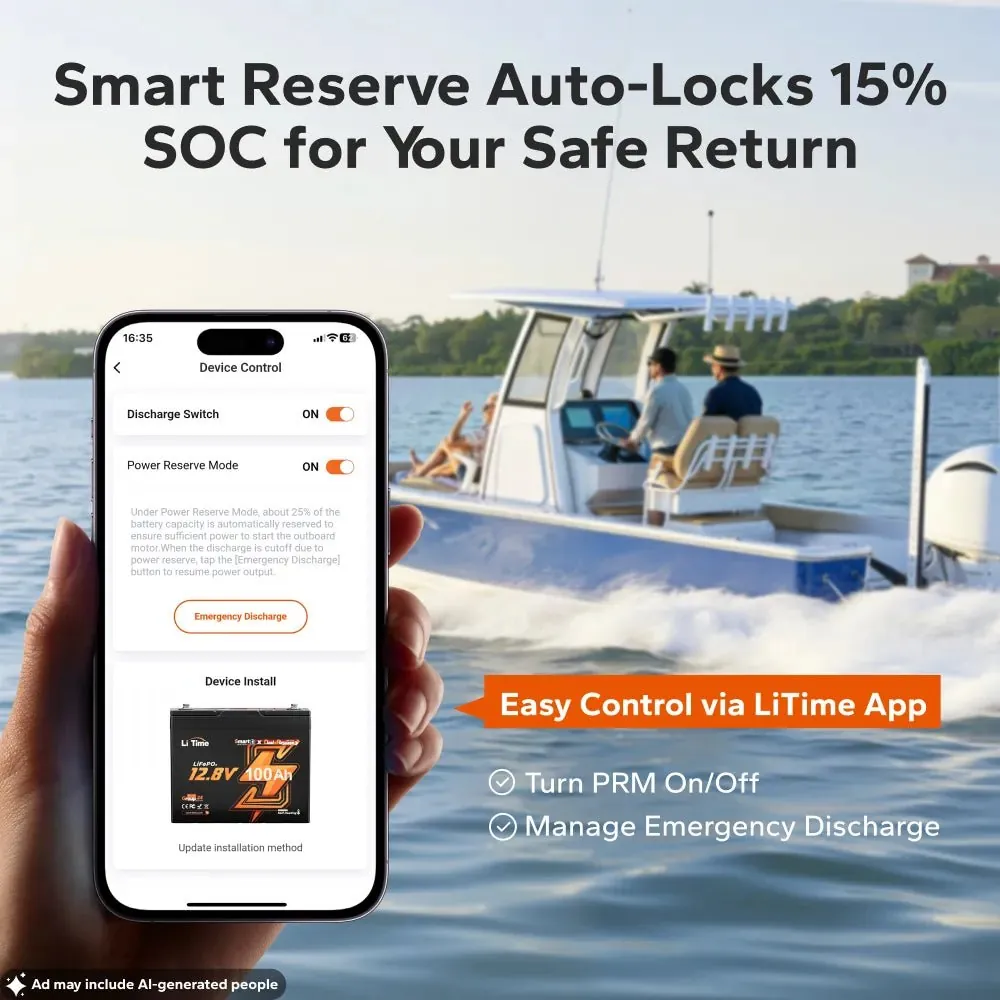
- Protective extras: a reserve that keeps 15% of capacity for engine restarts, and a pause after repeated start attempts.
- Evidence: no independent cranking test of this exact model found; strong brand reputation among hobbyists.
- Score: 7.8/10, provisional.
Specifications
| Spec | LiTime 12V 100Ah Group 24 Dual Purpose |
|---|---|
| Energy | 12.8V nominal, 100Ah, 1,280Wh |
| Cranking | 900 CCA at 14°F; 1,000 MCA at 32°F (brand) |
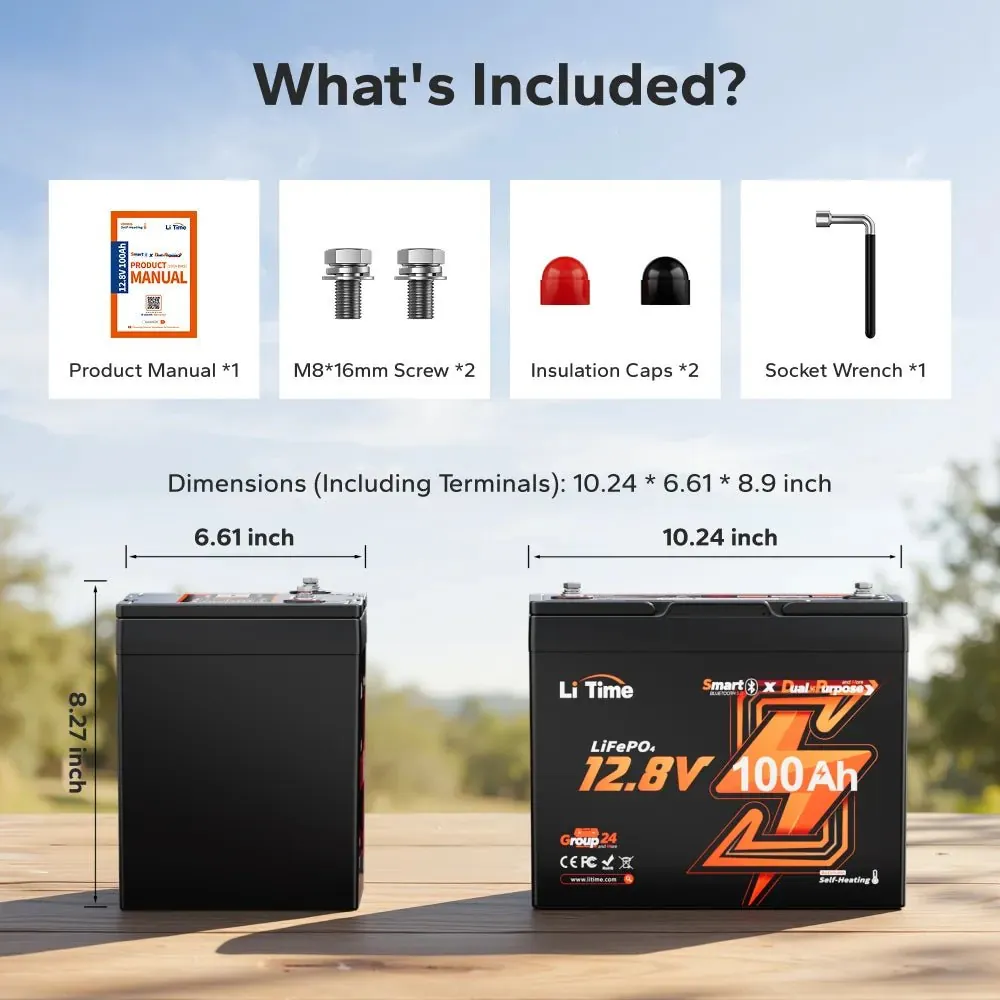
| Size / weight | 10.24 × 6.61 × 8.27 in; about 22.71 lb (brand) |
| Self-heating | Activates below 41°F and stops at 50°F (brand) |
| Low-temperature protection | Charging stops below 32°F; discharging stops below -4°F |
| Protection | IP67; smart cranking protection (3 seconds per start; BMS pauses 15 minutes after 3 consecutive attempts) |
| Power reserve | Automatically keeps 15% for an engine restart |
| Cycle life | 5,000+ cranking and 4,000+ deep cycles (brand) |
| Monitoring | Bluetooth with OTA updates through the LiTime app |
How the cranking protections work
Two features are worth understanding. First, the brand says a smart power reserve keeps about 15% of capacity locked away for cranking, so that running onboard electronics does not leave too little to start the engine. Second, the cranking protection limits each start to about 3 seconds and pauses the BMS for 15 minutes after three consecutive attempts. That protects the battery, but it also means a failed start sequence can leave you waiting, which matters on the water. The brand lists compatibility with common outboard brands including Honda, Suzuki, Evinrude, Tohatsu and Mercury; always check your engine’s requirement and the brand’s compatibility guidance.
What independent sources add
I did not find a published test that measured this battery’s cranking current, so the CCA and MCA figures here are the brand’s. What I did find: the model sits on the shortlist of budget lithium batteries that the DIY Solar Forum community and reviewers commonly recommend, a Gadget Flow write-up describes it as doing both jobs, and Watts on the Roof treats LiTime’s 100Ah line as a budget RV benchmark. On Trustpilot, LiTime holds 4.6/5 from 1,637 reviews (read October 6, 2026): praise for light weight, fast shipping and responsive support, and complaints about missing parts, ‘replace battery’ errors and slow replacements. An RV Outfitting review (December 2025, a different LiTime model) calls the owner experience polarized, with quality-control variance and BMS trips under heavy loads.
Versus WattCycle and Dakota Lithium
| LiTime 12V 100Ah G24 Dual Purpose | WattCycle 12V 100Ah 1200CCA | Dakota Lithium DL+ 12V 60Ah | |
|---|---|---|---|
| Cranking | 900 CCA at 14°F; 1,000 MCA at 32°F | 1,200 CCA (brand) | 1,000 CCA |
| Energy | 1,280Wh | 1,280Wh | 720Wh |
| Weight | About 22.71 lb | 24.25 lb | 16.5 lb |
| Self-heating | Yes, below 41°F | Yes, below 32°F | Internal heat while charging below 32°F |
| Warranty | Not stated in the listing | Not listed in my sources | 11 years |
CCA, MCA and test temperatures differ between makers, so cranking numbers are not directly comparable. “Not stated” means the figure was not in the sources I read. See also our WattCycle 1200CCA review.
Who should buy it, and who should skip it
Buy it if you want one battery to start an outboard and run your electronics, you have confirmed that its published cranking figures meet your engine’s requirement, and you will test it when it arrives.
Skip it if your engine needs a very high cranking current, you want a long, clearly stated warranty before ordering, or you want a battery with a published independent cranking test.
Questions people ask
Is it really both a starting and a deep-cycle battery?
The brand rates it for 5,000+ cranking events and 4,000+ deep cycles. Those are brand figures; the rating conditions matter, so treat them as indicative.
Does it work in the cold?
It has self-heating below 41°F and low-temperature protection, but charging stops below 32°F unless it has heated itself first.
Is the app necessary?
No. The battery works without it. The app adds monitoring and over-the-air updates.
My take and score
Research score: 7.8 / 10 (provisional)
Strong specifications, a thoughtful reserve design and good brand reputation, lowered because the cranking figures are unverified by an independent test and because owner reports mention quality-control variance.
Researched from public evidence, not hands-on testing. Store and service problems are rated separately as the store risk. How scores work
Sources
- Trustpilot: LiTime reviews (read October 6, 2026)
- Gadget Flow: LiTime 12V 100Ah Group 24
- Watts on the Roof: LiTime 12V 100Ah review
- RV Outfitting review (December 2025; covers a different model)
- LiTime product page (litime.com)
- Brand overview: LiTime on Jensolnar
Prices and availability change often, so check the retailer for current details.