Researched by
Based on FNIRSI’s specifications and independent reviews read on October 13, 2026; not a hands-on test by this site and not electrical safety advice. High-voltage work needs a properly rated meter and training.
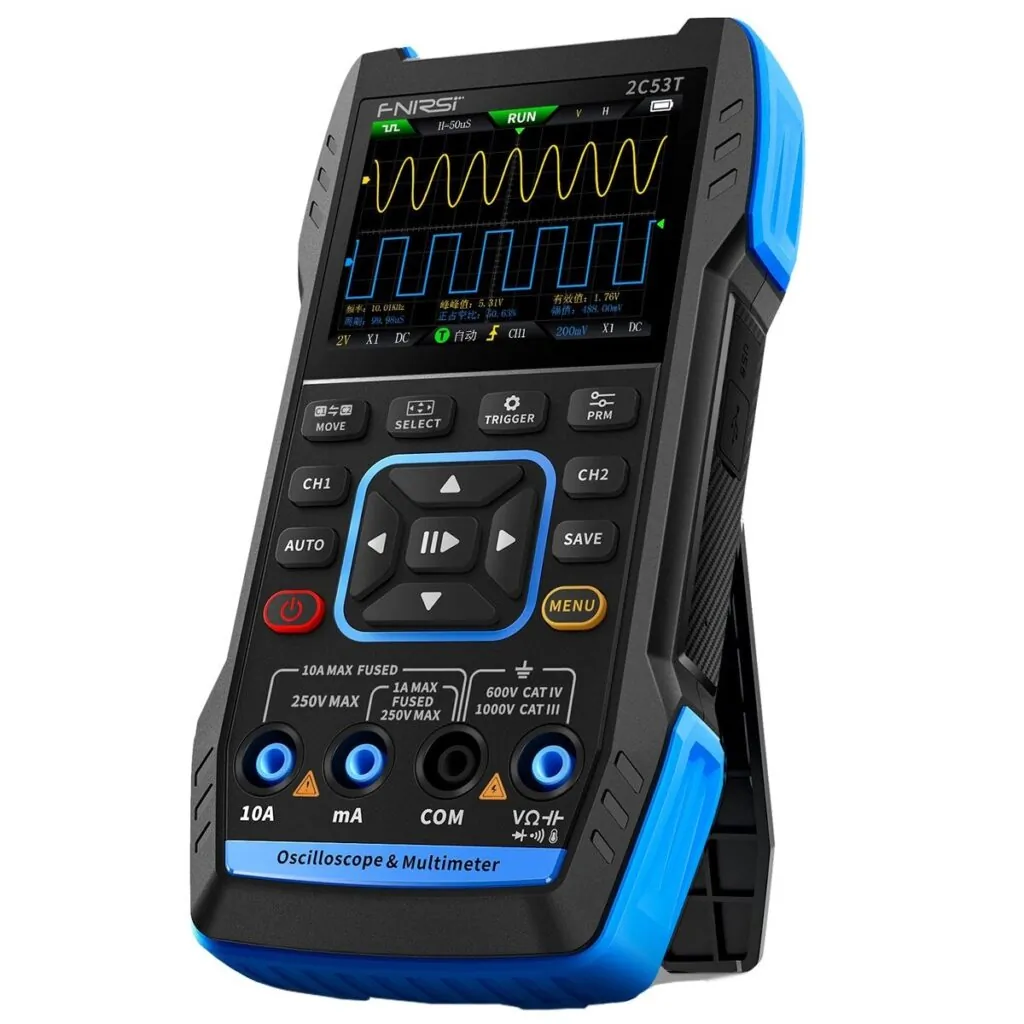
The FNIRSI 2C53T is a handheld 3-in-1 instrument: a 2-channel 50 MHz oscilloscope, a 19,999-count true-RMS multimeter and a 50 kHz signal generator in one battery-powered case. It suits makers checking Arduino signals, PWM, sensors and audio. An independent bench test found its DC readings close to a reference meter and some automatic measurements wrong.
What the FNIRSI 2C53T can do
| Section | FNIRSI 2C53T specification |
|---|---|
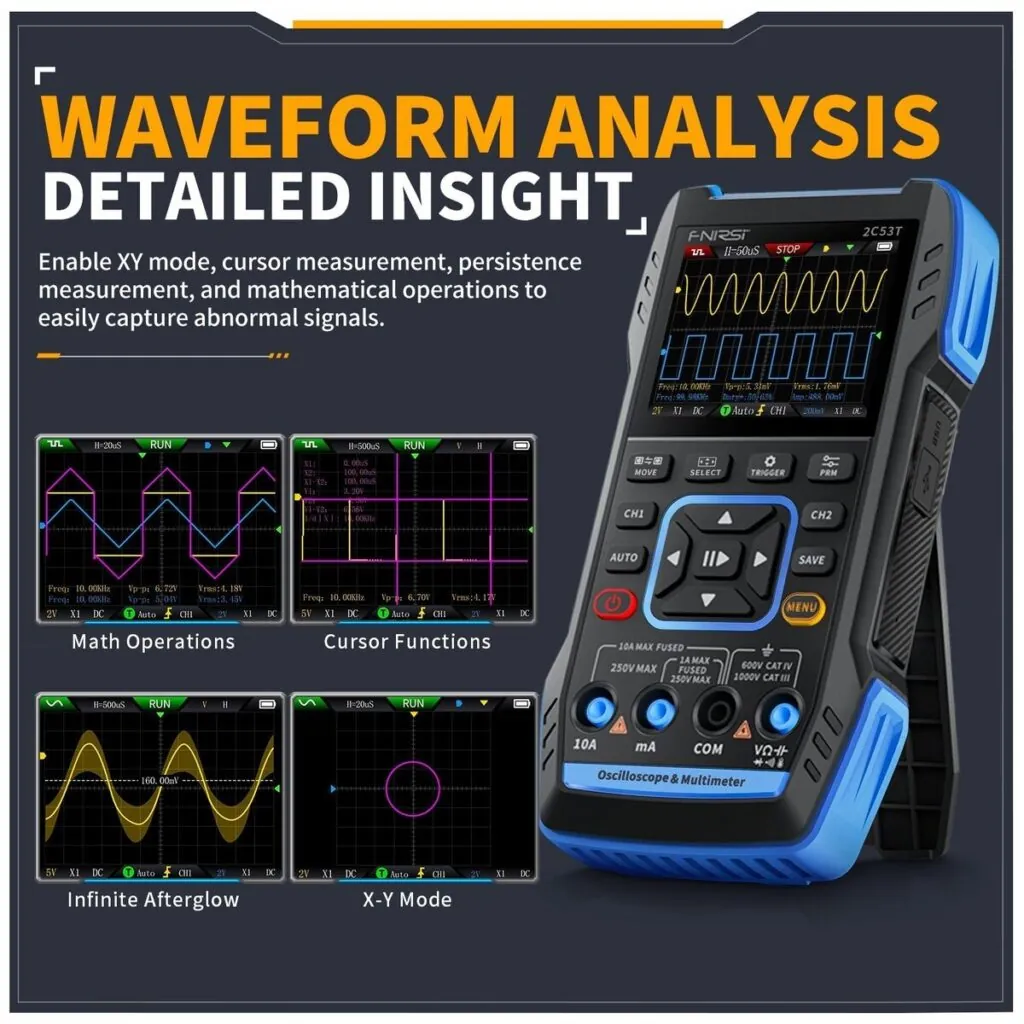
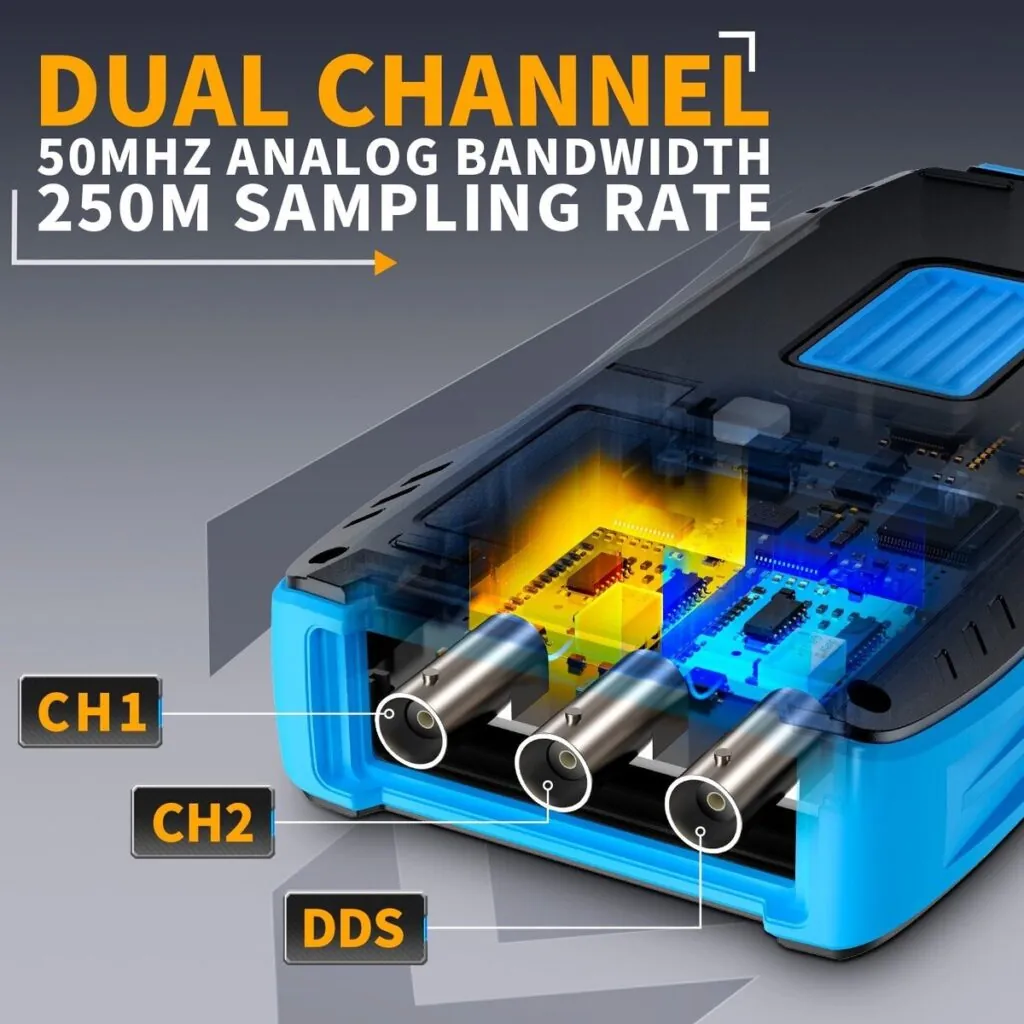
| Oscilloscope | 2 channels, 50 MHz, 250 MS/s, 1 kpts memory, 1 MΩ input, 10 ns to 20 s/div |
| Triggers and modes | Auto, normal, single; rising or falling edge; Y-T, roll, X-Y; FFT; screenshots |
| Max input (scope) | Plus or minus 400V peak with the high-voltage module (brand claim) |
| Multimeter | 4.5 digits, 19,999 counts, true RMS; to 1000V DC, 750V AC, 10A |
| Signal generator | 13 waveforms, 0 to 50 kHz, 0 to 3V |
| Screen and battery | 2.8 in, 320 x 240; 3,000mAh, about 6 hours |
| Size and weight | 167 x 89 x 35 mm; 300 g |
| Versions | 2C53T Std and 2C53T Plus |
What the bench test found
The element14 characterization by gam3t3ch (August 20, 2026) compared the 2C53T with a Hanmatek DOS1102 bench scope and Multicomp Pro and Fluke 117 meters. DC voltage readings stayed close to the reference meter. In the strongest negative result, a known 400 Hz square wave looked right on screen while the automatic frequency readout jumped above 22 kHz.
The reviewer kept it as a portable secondary instrument. The reviewer would recommend it to a beginner with guidance: learn volts and time per division, and check odd readings against a second meter. The 250 MS/s rate, the memory depth and the high-voltage ratings were not verified.
OneSDR reached a similar verdict: a budget handheld tool that cannot replace a bench scope, with limited triggering and fine detail.
Safety: keep it on low-voltage work
The product page lists a 1000V DC meter range but no CAT safety category, and the bench review left the high-voltage ratings untested. Use the 2C53T on battery projects, power supplies and audio gear. For mains outlets and breaker panels, use a meter that carries a CAT III or CAT IV rating.
FNIRSI 2C53T vs alternatives
| FNIRSI 2C53T | FNIRSI 2C23T | Entry bench scope | Separate meter + scope | |
|---|---|---|---|---|
| Form | Handheld 3-in-1 | Older handheld 3-in-1 | Desktop, mains-powered | Two instruments |
| Bandwidth | 50 MHz | 10 MHz | Usually 70 to 100 MHz | Depends on scope |
| Portability | Pocketable | Pocketable | Bench only | Bulky |
| Best for | Field checks, learning | Slow signals only | Trusted measurements | Rated meter for mains |
Who should buy it, and who should skip it
Buy it if you want one battery tool for quick signal checks away from the bench and you will learn to read the trace yourself.
Skip it if you need numbers you can trust without a second opinion, work above 50 MHz, or measure mains wiring. A bench scope and a CAT-rated meter cost more and do those jobs.
FNIRSI 2C53T questions
Is the FNIRSI 2C53T good for beginners?
Yes, with care. The element14 reviewer recommends the FNIRSI 2C53T to beginners who learn time per division and check automatic readings against another meter, because some automatic measurements can be wrong.
What is the difference between the FNIRSI 2C53T and 2C23T?
The FNIRSI 2C53T has 50 MHz of bandwidth and a 250 MS/s sample rate, while the older 2C23T is a 10 MHz design. Both combine scope, meter and generator; the 2C53T suits faster digital and PWM signals.
Can the FNIRSI 2C53T measure a household outlet?
FNIRSI lists a 750V AC meter range, but the product page shows no CAT safety rating and independent testing skipped high voltage. Use a CAT III rated meter for outlets and panels, and keep the 2C53T for low-voltage circuits.
Score
Research score: 7.0 / 10 (provisional)
A lot of capability in a pocket case, with DC readings that held up in an independent bench test. It loses points for automatic measurements that can mislead, no stated CAT rating and unverified headline specs. Store and service risk is shown separately.
Researched from public evidence, not hands-on testing. Store and service problems are rated separately as the store risk. How scores work
Sources
- FNIRSI 2C53T product page (read October 13, 2026)
- element14 community: FNIRSI 2C53T characterization and review by gam3t3ch (August 20, 2026)
- OneSDR: FNIRSI 2C53T oscilloscope review
- Brand overview: FNIRSI on Jensolnar