Researched by
Based on published specifications, independent tests and owner reports read on October 6, 2026; not a hands-on test, and not installation advice. Connecting a power station to a home or RV electrical system should follow the manufacturer’s manual and local rules; a qualified electrician can help.
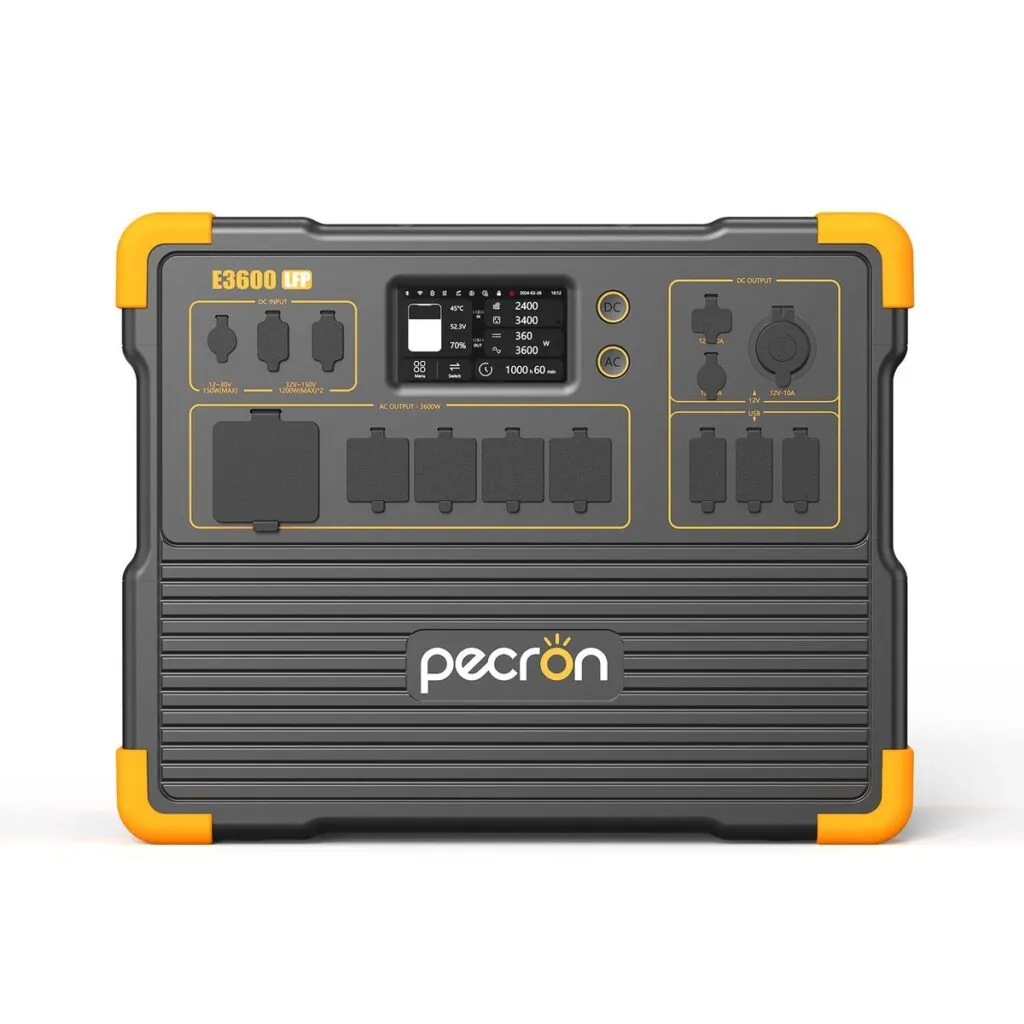
The Pecron E3600LFP is a 3 kWh power station sold on a simple promise: the capacity and output of a premium unit for noticeably less money. Because power stations are easy to overstate on paper, the interesting part is what independent testers actually measured. Here is the spec sheet, the test results, and the one trade-off everyone mentions: weight.
At a glance
- Capacity and output: 3,072 Wh LiFePO4, 3,600W AC (7,000W surge), two solar inputs for up to 2,400W.
- Measured: reviewers report about 84% to 86% of rated capacity at the DC output and about 90% AC efficiency, and a UPS switchover under 20 ms.
- Weight: about 79 lb.
- Brand rating: Pecron has 3.6/5 from 53 Trustpilot reviews, so support experiences vary.
- Product score: 7.7/10, provisional; store risk is shown separately.
Specifications
| Spec | Pecron E3600LFP |
|---|---|
| Capacity | 3,072Wh |
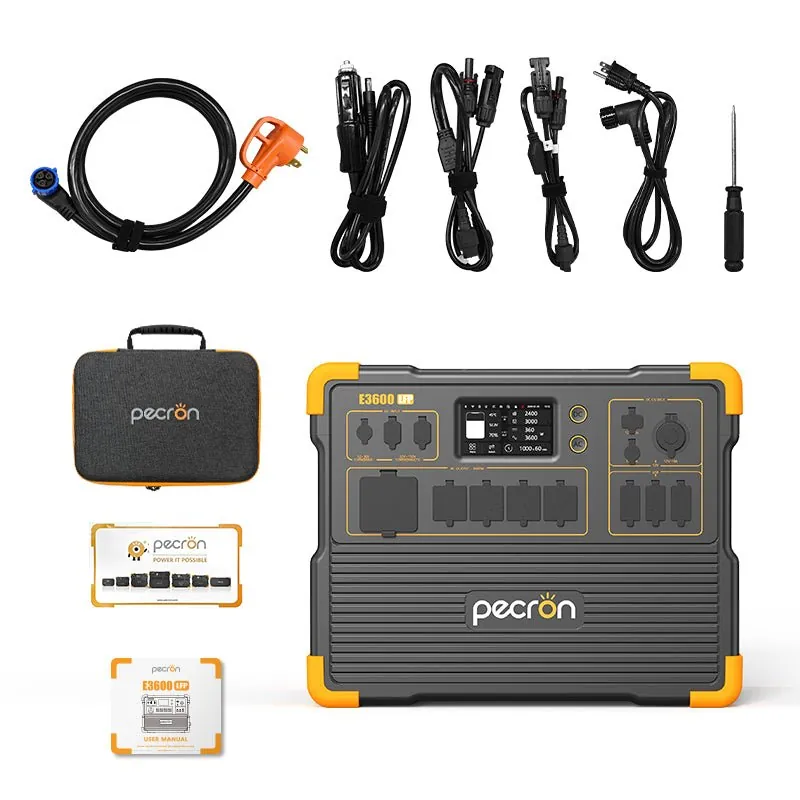
| Output | 3,600W pure sine wave AC (7,000W surge); AC 30A; 16 outputs; USB-C PD 100W; 15W wireless charging |
| Charging | Up to 3,200W AC with the 30A cable (about 1.3 hours, brand); 1,800W with the 15A cable; solar up to 2,400W (2 × 1,200W) |
| Battery | LiFePO4, 3,500+ cycles to 80% (brand) |
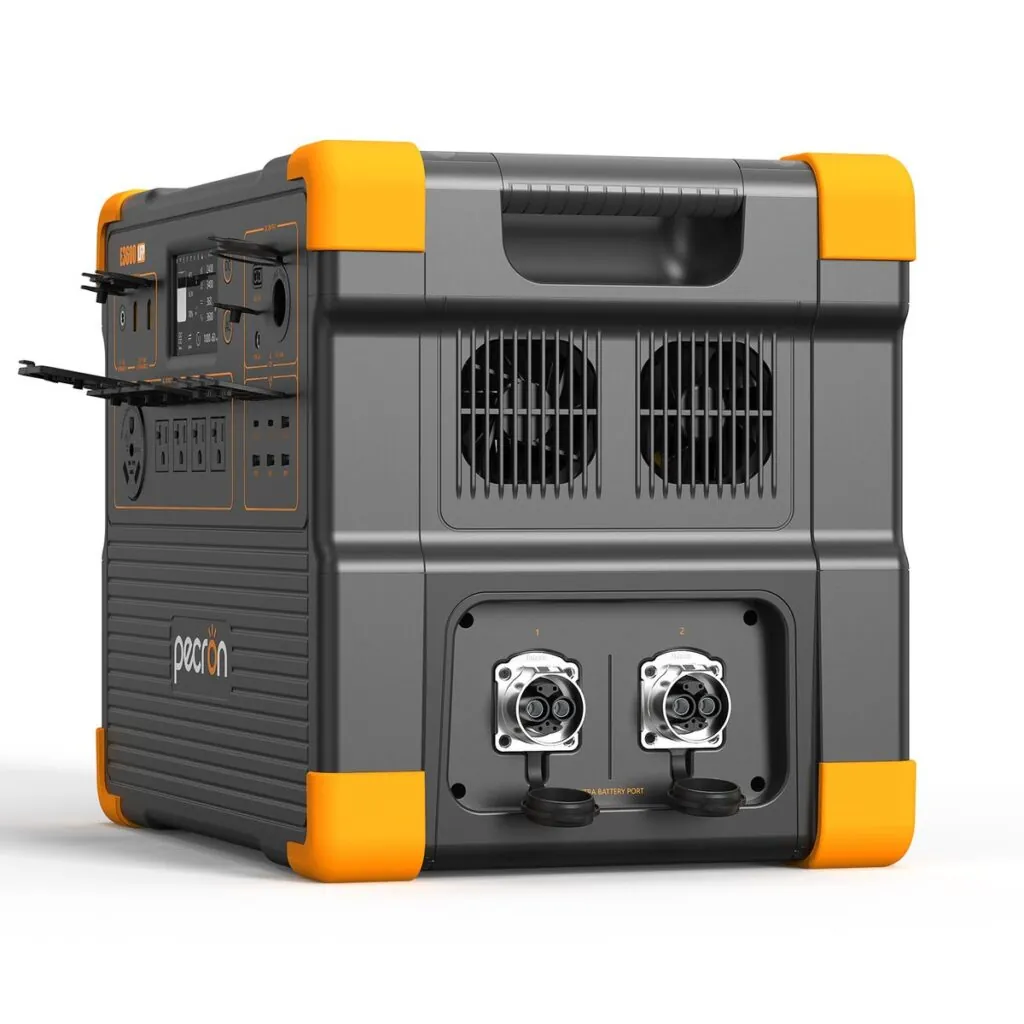
| Expansion | Up to 15,360Wh with 4 × EP3000-48V batteries (brand) |
| Warranty | 2+3 years (brand) |
| Weight | About 79 lb (36 kg), per the independent review |
What testers measured
Several reviewers ran the E3600LFP through a capacity test. Per summaries of their results (The Solar Lab, Solar Power Picks, Power Station Gear Lab and others listed in search results), they measured about 2,650 Wh at a 20A load (86% of the 3,072 Wh rating) and about 2,590 Wh at 10A (84%), AC output capacity around 2,770 Wh (about 90% efficiency), and just over 4.5 hours running a 1,200W heater, a 700W fridge and lights together. In the UPS test, the unit switched in under 20 ms. In The Gadgeteer (December 2024; the sample was provided free by Pecron), the unit ran a full-size fridge for about 25.5 hours, lost about 1% charge idle over a week, was quiet, and recharged in about 2 hours versus the brand’s 1.3 hours with the 30A cable.
In plain terms: usable energy lands in the mid-80s percent of the label, which is normal for power stations, and the efficiency is respectable. Treat the rated 3,072 Wh as roughly 2,600 Wh of real-world energy.
The weight problem
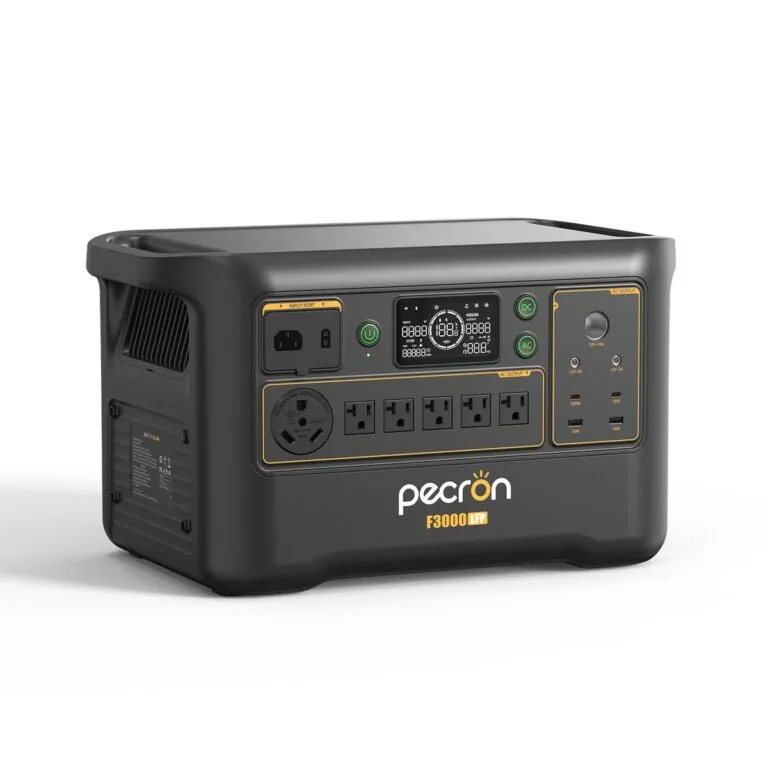
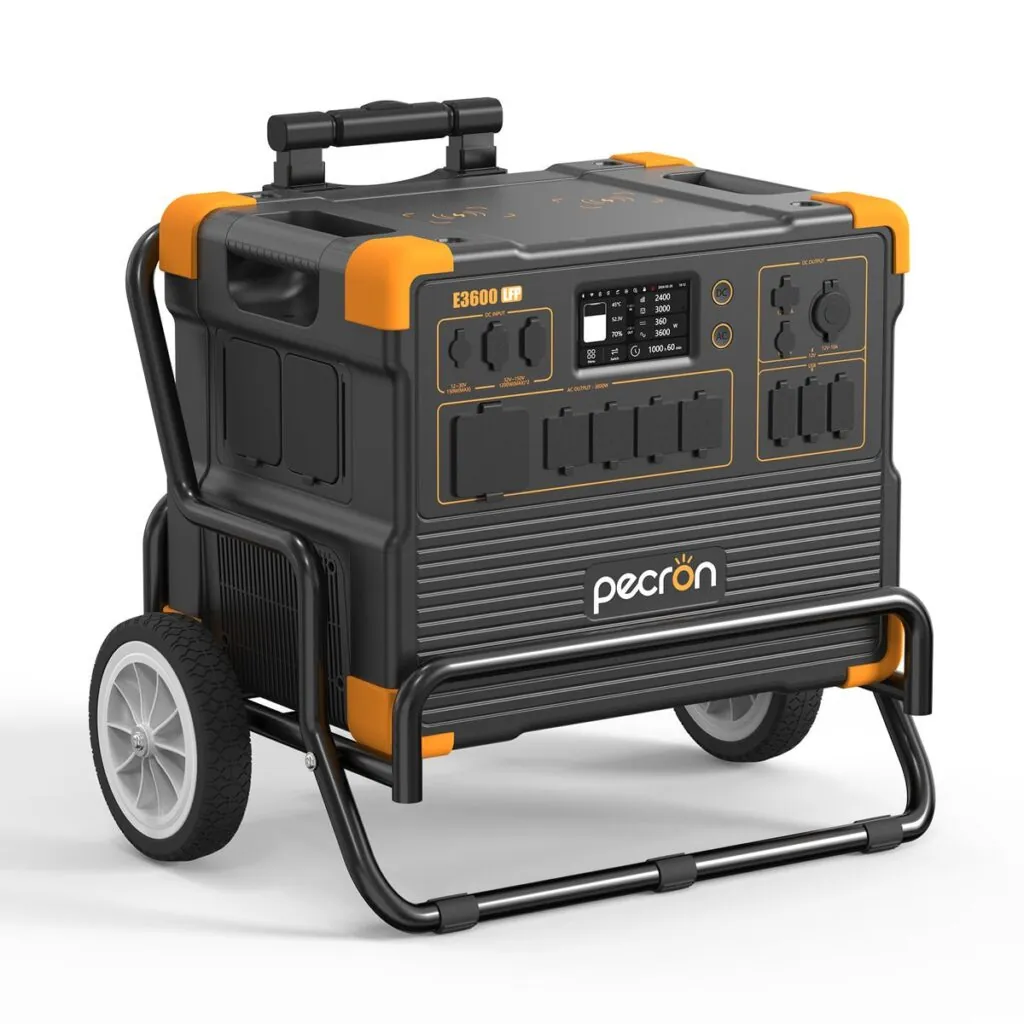
At about 79 lb it is a home-backup or RV unit, not something you carry to a campsite. The Gadgeteer reviewer said the optional trolley should be standard and noted the wheels loosened during testing. If you will move it often, compare the lighter F3000LFP.
Versus EcoFlow DELTA Pro and DELTA 2 Max
| Pecron E3600LFP | EcoFlow DELTA Pro | EcoFlow DELTA 2 Max | |
|---|---|---|---|
| Capacity | 3,072Wh | 3,600Wh | 2,048Wh |
| AC output | 3,600W (7,000W surge) | 3,600W (7,200W peak) | 2,400W (4,800W surge) |
| Weight | About 79 lb | About 99 lb | 50 lb |
| Cycle life | 3,500+ to 80% | 3,500 to 80% | 3,000+ |
| Warranty | 2+3 years | 3+2 years | 5 years |
Capacities differ, so this is a rough comparison. Figures come from product pages and may vary by variant.
Who should buy it, and who should skip it
Buy it if you want strong home-backup power and heavy loads for less money than the best-known brands, and you can handle 79 lb.
Skip it if you need a portable unit, the most polished app, or a long standard warranty (the brand lists 2+3 years).
Questions people ask
How much power can I really get from it?
Plan on roughly 2,600 Wh of usable energy based on the test results above.
Can it back up a home?
It has a UPS mode that switched over in under 20 ms in tests, and 240V output. Connecting it to a home panel needs a proper transfer switch and an electrician.
How is Pecron’s support?
Trustpilot shows 3.6/5 from 53 reviews (read October 6, 2026): praise for responsive support and value, complaints about defects, slow replacements and late accessories.
My take and score
Research score: 7.7 / 10 (provisional)
Good independent test results for capacity and output, lowered for its weight and a shorter standard warranty.
Researched from public evidence, not hands-on testing. Store and service problems are rated separately as the store risk. How scores work
Sources
- The Gadgeteer (sample provided by Pecron)
- The Solar Lab (listed in search results)
- Solar Power Picks (listed in search results)
- Power Station Gear Lab (listed in search results)
- Trustpilot: Pecron reviews (read October 6, 2026)
- Pecron product page (pecron.com)
- Brand overview: Pecron on Jensolnar
Prices and availability change often, so check the retailer for current details.