Researched by
Based on published specifications, independent tests and owner reports read on October 6, 2026; not a hands-on test, and not installation advice. Wiring a lithium battery should follow the manufacturer’s manual, and a qualified installer can help if you are unsure.
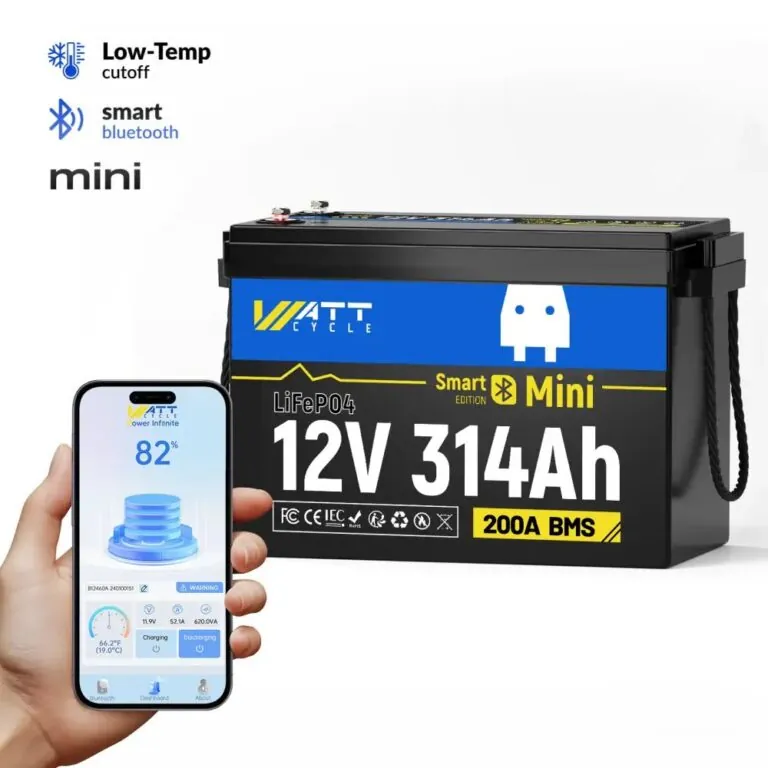
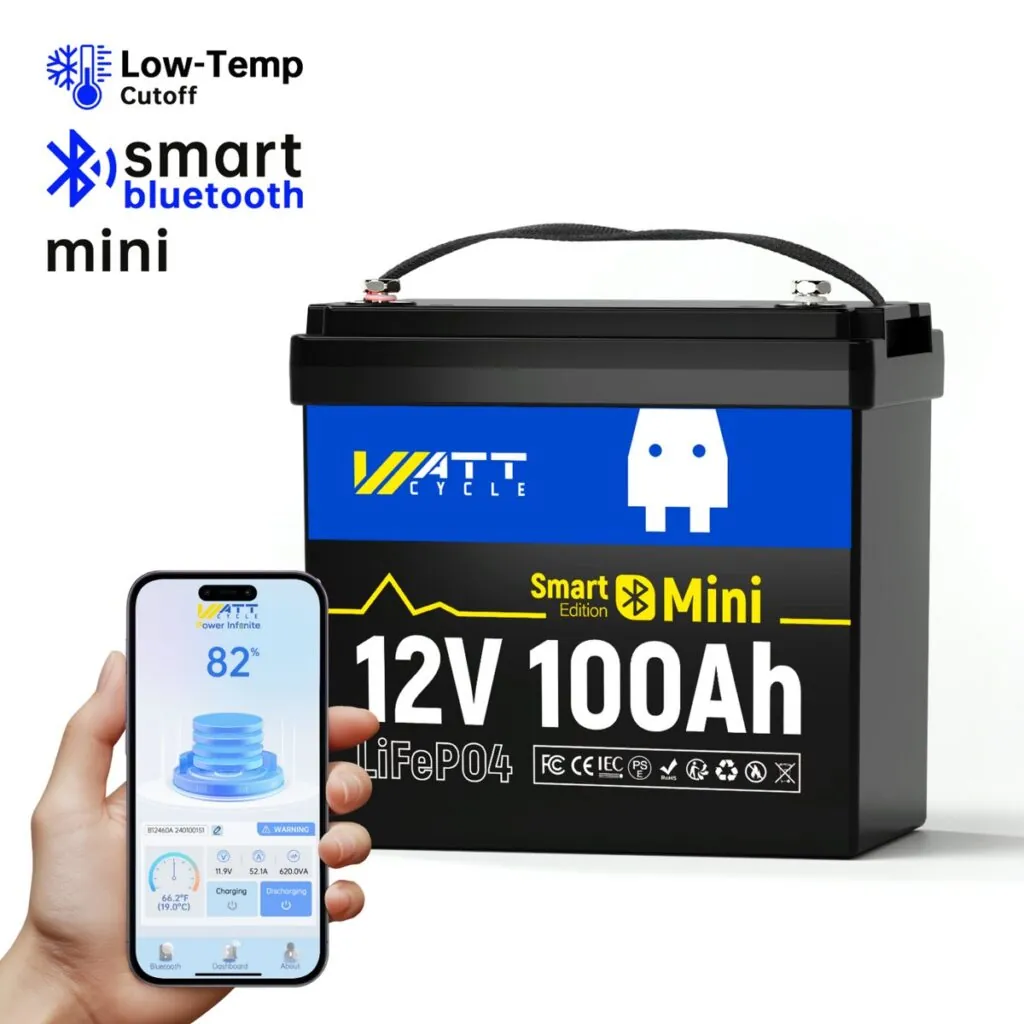
The WattCycle 12V 100Ah Mini Bluetooth is a compact LiFePO4 battery that gets recommended a lot for RVs, boats and small solar setups because it is cheap, light and has low-temperature protection. Two independent testers who bought or tested it came to opposite conclusions, which makes it a good example of why a battery needs more than a spec sheet. This review lays out both sides.
- Best for: low- to moderate-current installs (RV house loads, small solar) where weight and price matter.
- Test result: about 100 to 102 Ah measured by two independent reviewers, close to the rated 100 Ah.
- Main concerns: reports of heat-limited high-current output, cell swelling and weak balancing in one teardown, plus brand-wide Bluetooth/BMS complaints.
- Score: 6.5/10, provisional.
What the specs promise
| Spec | WattCycle 12V 100Ah Mini Bluetooth |
|---|---|
| Chemistry | LiFePO4 (lithium iron phosphate), A+ grade cells (per the brand) |
| Capacity / voltage | 100Ah, 12.8V nominal (about 1,280Wh) |
| BMS | 100A built-in; the brand says it disconnects if discharge current exceeds 300 ± 50A |
| Cycle life | Up to 15,000 cycles (brand claim) |
| Operating temperature | -4°F to 158°F (-20°C to 70°C), with low-temperature protection |
| Expansion | Up to 4 in series or 4 in parallel (up to 20.48kWh, per the brand) |
| Monitoring | Bluetooth app (Android 4.3+, Bluetooth 4.0; location permission required) |
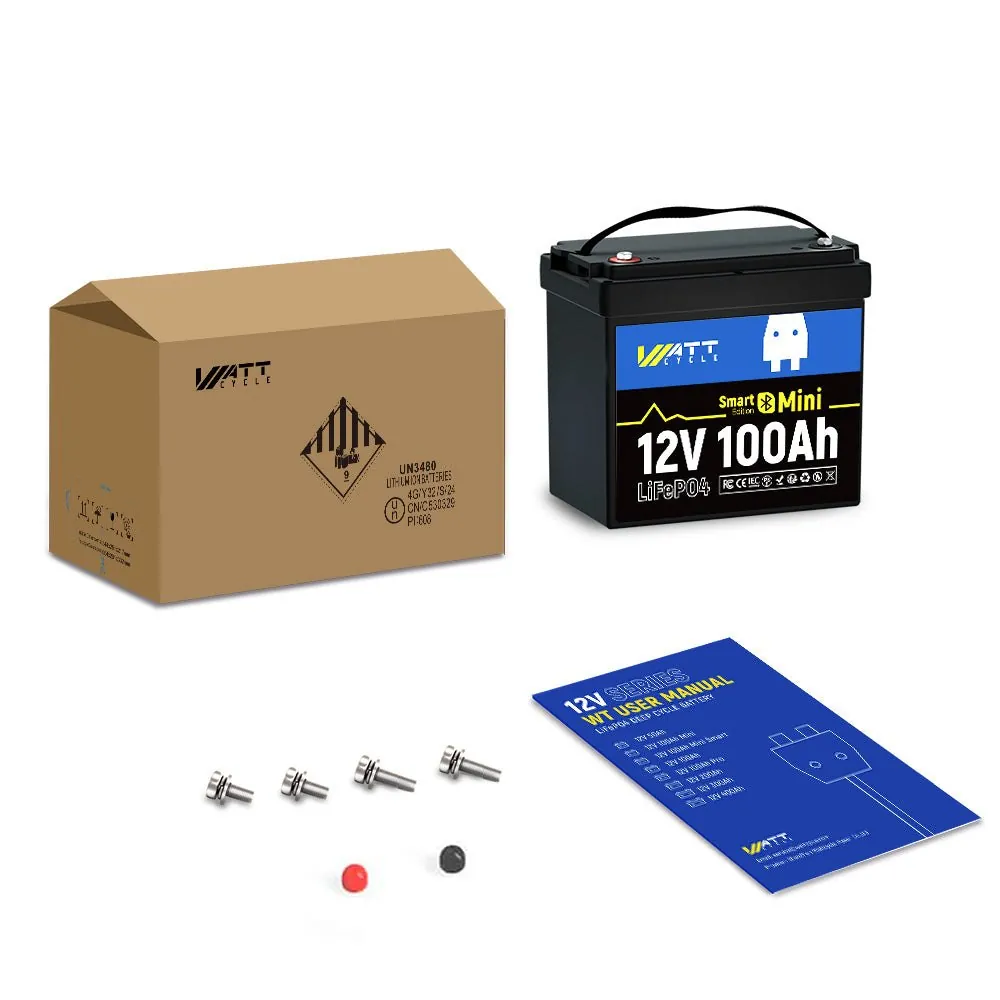
| Certifications listed | SDS, UN38.3, FCC, CE, RoHS (per the brand) |
| Weight | About 20 to 22 lb according to an independent review |
Two independent tests, two different verdicts
The positive one. The Camping Nerd measured about 100.5 Ah, saw the low-temperature cutoff stop charging when it was cold and resume soon after, and ran sustained 100A charge and discharge cycles without trouble. Its verdict was that this is a good-value upgrade from lead-acid, with the reminder that you need a lithium-compatible converter or charger.
The negative one. Clever Solar Power measured 102.3 Ah after top-balancing and 95% round-trip efficiency, and all four temperature-protection tests passed. But the tester also reported visibly bloated cells even though the battery was made in July 2025, said a second independent reviewer saw the same, and found the BMS shut down from MOSFET overheating at about 95°C when pulling the rated 100A continuously. The sealed, glued case made it hard to service, and balancing was slow (about 69 mA, roughly 19 hours to correct a 1.3 Ah imbalance). That reviewer’s conclusion was that they do not recommend it, though it can suit moderate-current, static installs.
These can both be true: different units, different test loads, and different standards for what counts as a problem. If you will run it near 100A for long periods, take the heat finding seriously. If your loads are lighter, the capacity and cold-weather results are encouraging.
Consistency between reviewed units and customer units
A separate concern is whether the battery you receive matches the ones reviewers got. Hackaday summarised testing by Will Prowse who found that a sample sent by WattCycle had better internals than units bought by customers (cables, busbars and a mix of cell types). That article does not say which model, so it is a warning about the brand, not a verdict on this exact battery.
Bluetooth app and BMS
The battery works without the app, and the app does give live monitoring. Complaints centre on connection reliability and the BMS: an independent review on RV Outfitting (December 2025) reported inconsistent connections and occasional shutoffs, and owners in parallel setups describe batteries that seem to take turns supplying the load (DIY Solar Forum: parallel “take turns” thread; WattCycle’s own explanation for the brand’s explanation). Treat the app as a bonus and do not design a system that depends on it.
How it compares
| WattCycle 12V 100Ah Mini Bluetooth | LiTime 12V 100Ah Mini | Renogy 12V 100Ah Smart | |
|---|---|---|---|
| Weight | About 20 to 22 lb (independent review) | 19 lb (listing) | 26 lb (listing) |
| BMS | 100A | 100A | 100A continuous discharge, 50A continuous charge |
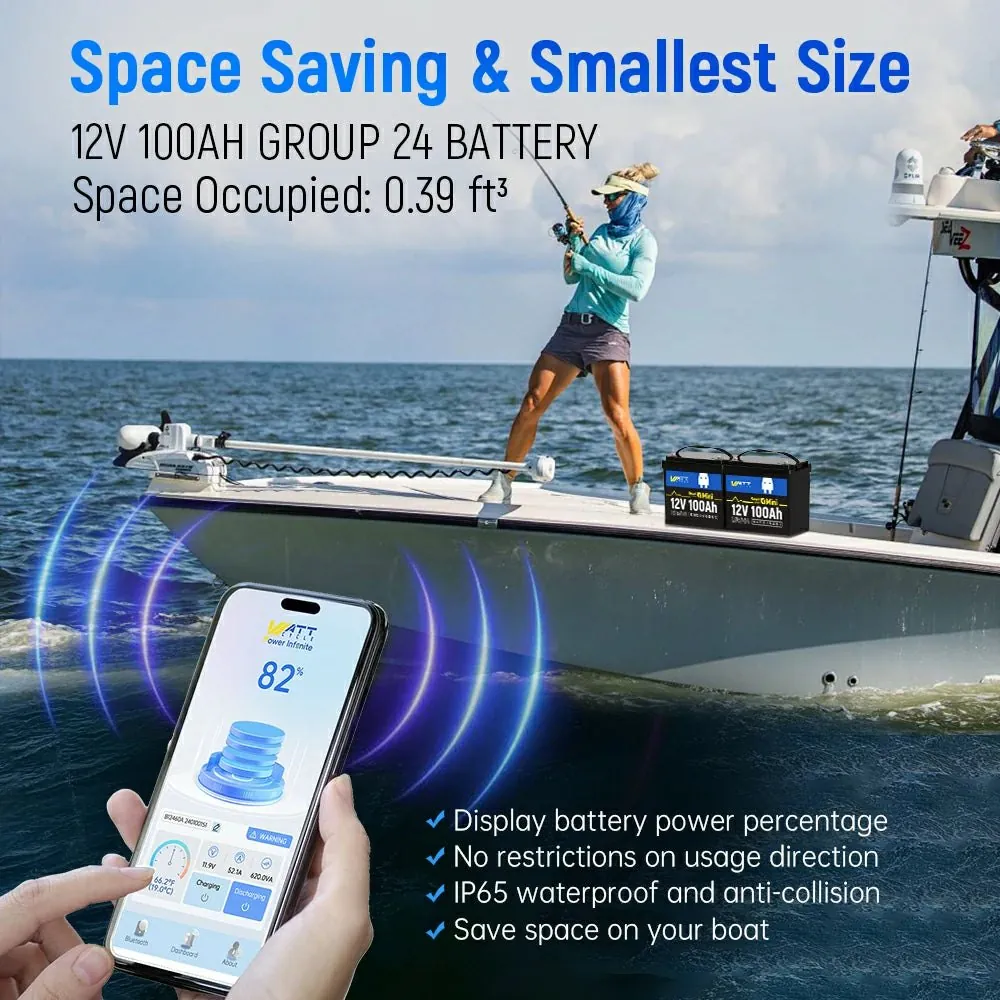
| Protection rating | IP65 (per brand image) | IP65 | IP54 |
| Warranty | Up to 5+2 years, per reviewers (check terms) | 5 years | 5 years, prorated |

LiTime and Renogy figures come from their product pages and may vary by variant. WattCycle’s weight comes from an independent review, not the brand’s page.
Who should buy it, and who should skip it
Buy it if your loads are moderate, space and weight matter, price is a priority and you will test the capacity when it arrives.
Skip it if you need sustained 100A output, a vibration-heavy install, a serviceable battery, or app monitoring you can rely on. Look at LiTime or another brand with a stronger independent track record for those uses.
Questions people ask
How big is the WattCycle 100Ah Mini?
One reviewer lists 9.0 x 5.6 x 8.2 inches and 20.8 lb. The brand says it is smaller by volume than its standard Group 24 battery.
Does it work in cold weather?
It has a low-temperature cutoff that stops charging below freezing. Both independent testers confirmed the protection works.
Can I connect more than one?
The brand says up to four in series or four in parallel. Follow the manual, and read the owner reports about parallel behavior above.
My take and score
Research score: 6.5 / 10 (provisional)
Good measured capacity and cold-weather protection, offset by one detailed teardown reporting heat limits, cell swelling and weak balancing, brand-wide BMS and app complaints, and reports that customer units differ from review units.
Researched from public evidence, not hands-on testing. Store and service problems are rated separately as the store risk. How scores work
Brand context: Trustpilot listed WattCycle at 4.7/5 from 620 reviews when I read it on October 5, 2026, which reflects many satisfied owners; the technical sources above are why this score is lower.
Sources
- The Camping Nerd
- Clever Solar Power
- Hackaday
- DIY Solar Forum: parallel “take turns” thread
- Trustpilot: WattCycle reviews
- WattCycle product page (wattcycle.com)
- Brand overview: WattCycle on Jensolnar
Prices and availability change often, so check the retailer for current details.