Researched by
Based on published specifications, independent reviews and owner reports read on October 6, 2026; not a hands-on test, and not installation advice. Wiring a battery or power system should follow the manufacturer’s manual, and a qualified installer can help if you are unsure.
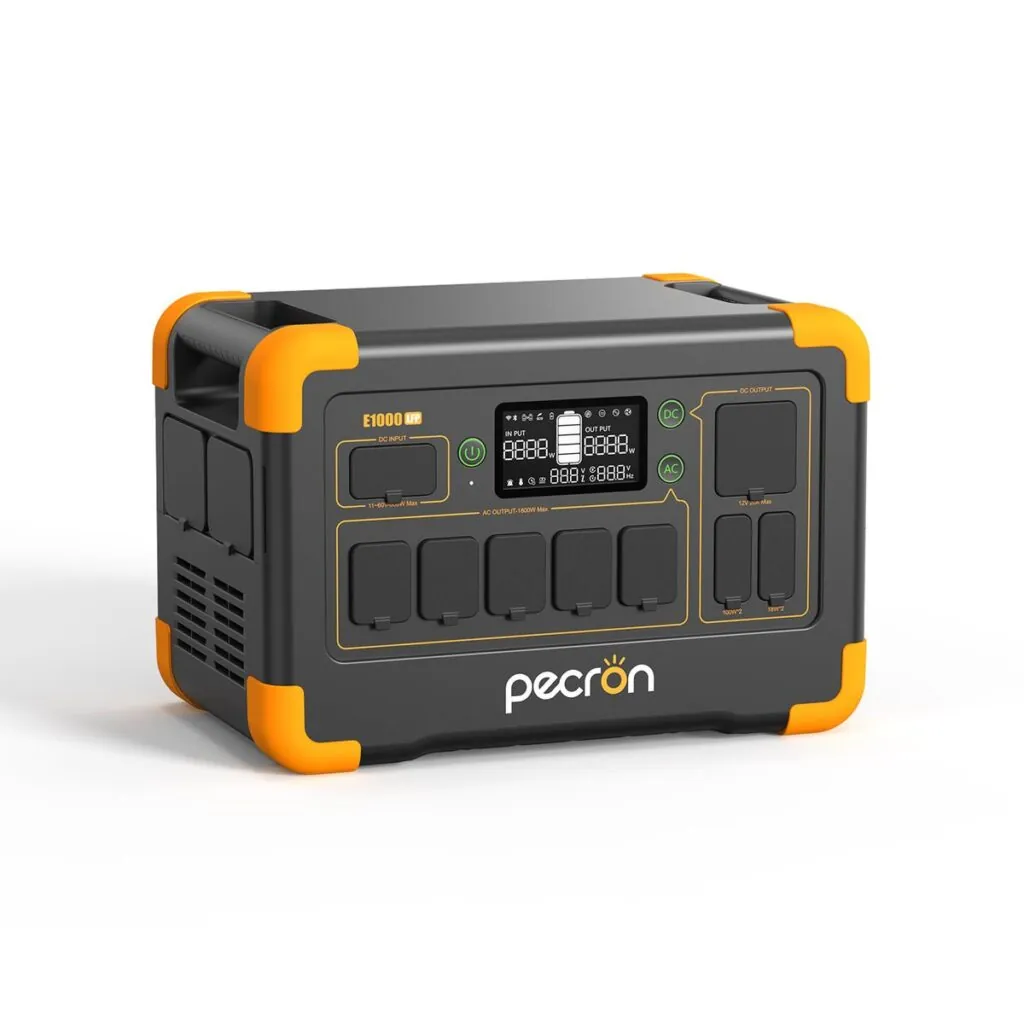
A 1 kWh power station is the sweet spot for camping, short outages and a home-office UPS. The Pecron E1000LFP offers 1,024 Wh, an 1,800 W inverter and an expansion option that quadruples its capacity, at a price below the best-known names. Independent testers have measured it, and the interesting findings are efficiency and what happens when you push the surge rating.
Test results at a glance
- Weight: about 29 lb per a retailer listing.
- Efficiency: one test ran a 1,556 W load for 33 minutes against 39 expected, about 84% efficiency.
- Surge: rated 3,000 W, but a test held a 2,200 W load for only about five seconds before shutting down.
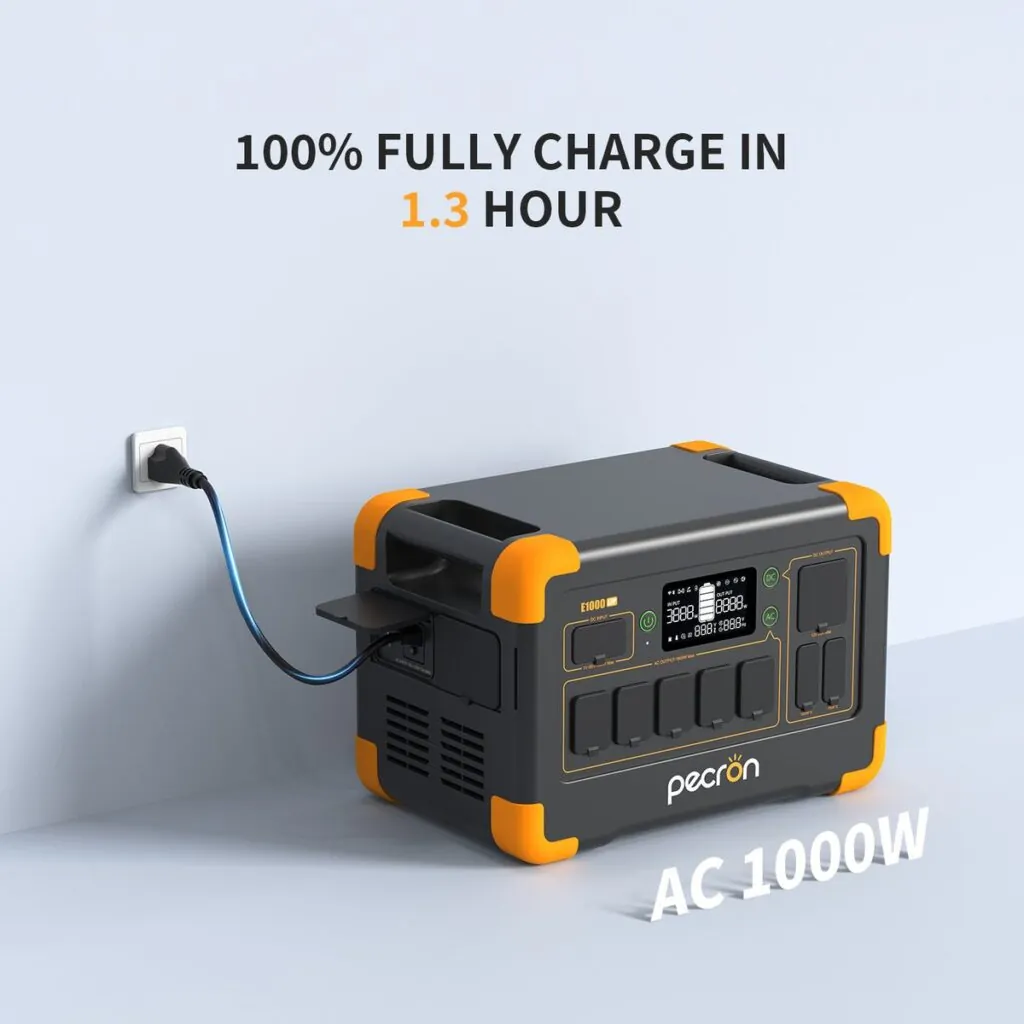
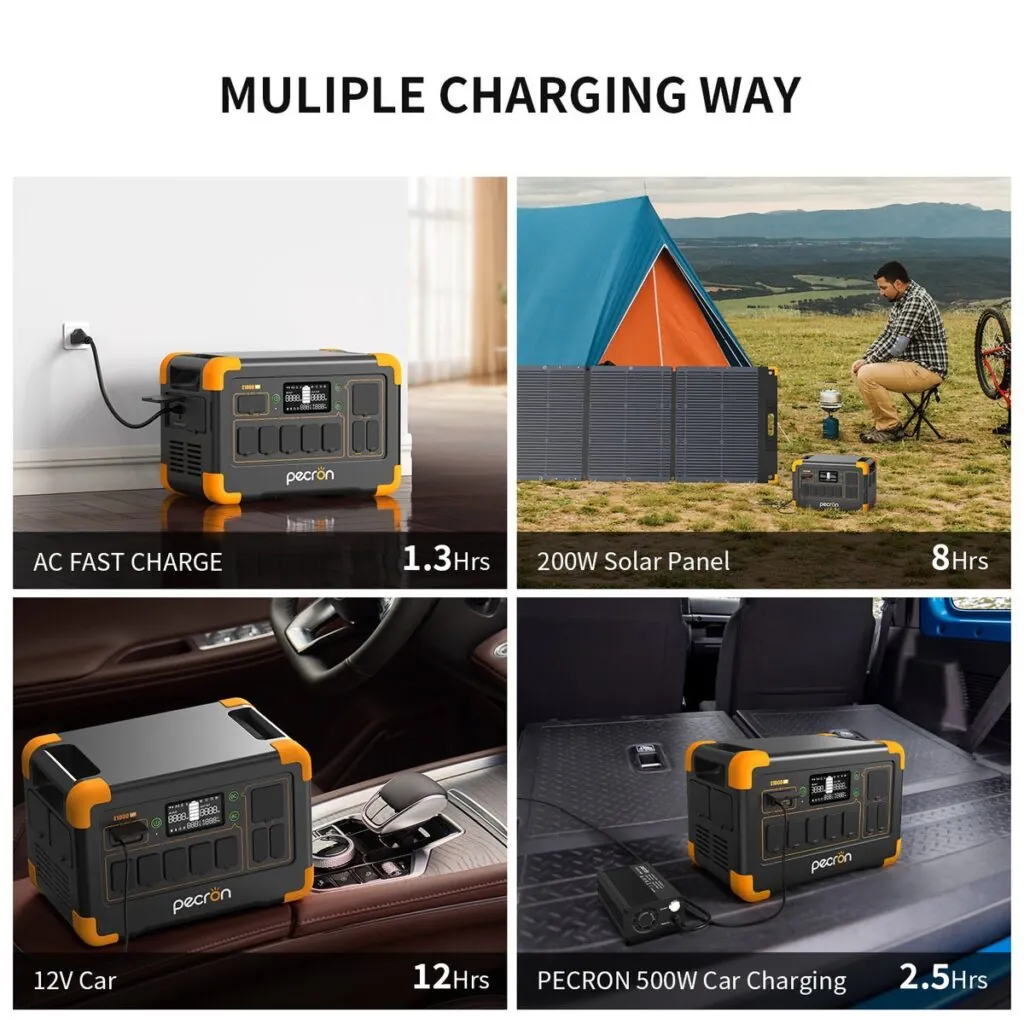
- Charging: about 80% in an hour from the wall (up to 1,000 W), solar up to 600 W.
- Product score: 8.0/10, provisional; store risk is shown separately.
Specifications
| Spec | Pecron E1000LFP |
|---|---|
| Capacity | 1,024Wh (51.2V / 20Ah) |
| Output | 1,800W pure sine wave AC (3,000W surge); 12 outputs; USB-C PD 100W; XT60 12V 20A |
| Charging | Up to 1,000W AC; 80% in 1 hour; solar up to 600W (brand) |
| Battery | LiFePO4, 3,500+ cycles to 80% (brand) |
| Expansion | Up to 4,096Wh with EP3000-48V batteries (brand) |
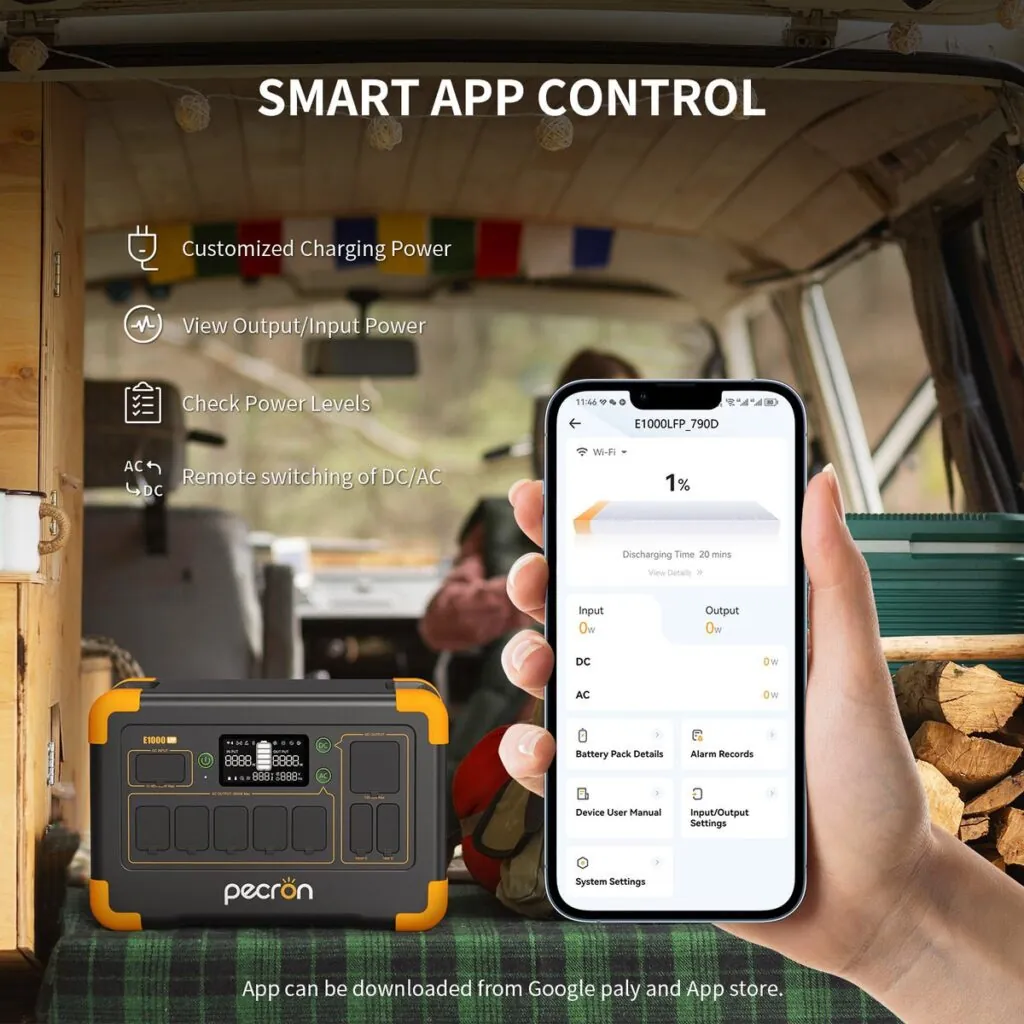
| Control | App and Wi-Fi control; UPS function |
| Warranty | 2+1 years (brand) |
| Weight | Not listed in my sources |
What testers found
The Gadgeteer, The Solar Lab, Ryan Mercer and Battery Skills (listed in search results) praise the clear display with input, output and time remaining, quiet fans and high output for the size, plus excellent labeling. Criticisms: the app is limited and cannot send notifications if the unit loses power, and 29 lb is heavy for a unit called portable. The surge test is the one to remember: the 3,000 W surge rating is a short burst, not a sustained capability, so keep loads at or below 1,800 W.
Versus Bluetti and EcoFlow
Comparison sites in search results say the E1000LFP gives more AC outlets, higher solar input and expandability than the Bluetti AC180, and is lighter, while the Bluetti offers a larger starting capacity, faster charging and a 5-year warranty (the Pecron’s is 2+1 years). Against the EcoFlow Delta 2, it lists a 3,500-cycle life versus 3,000 and 600 W versus 500 W solar input. Against the Delta 3 Plus, both have 1,024 Wh and 1,800 W output, but the EcoFlow surges higher and more reliably.
Brand context
Brand-level evidence. Trustpilot shows Pecron at 3.6/5 from 53 reviews (read October 6, 2026): praise for responsive support and value, and complaints about defects, slow replacements and accessories arriving late.
Versus other Pecron models
| Pecron E1000LFP | Bluetti Elite 100 V2 | Jackery Explorer 1000 v2 | |
|---|---|---|---|
| Capacity | 1,024Wh | 1,024Wh | 1,070Wh |
| AC output | 1,800W (3,000W surge) | 1,800W continuous | 1,500W (3,000W surge) |
| Weight | Not listed in my sources | 25.3 lb | 14.33 lb |
| Cycle life | 3,500+ to 80% | Up to 4,000 | 4,000 |
| Warranty | 2+1 years | 5 years | 3 years + 2 extended |
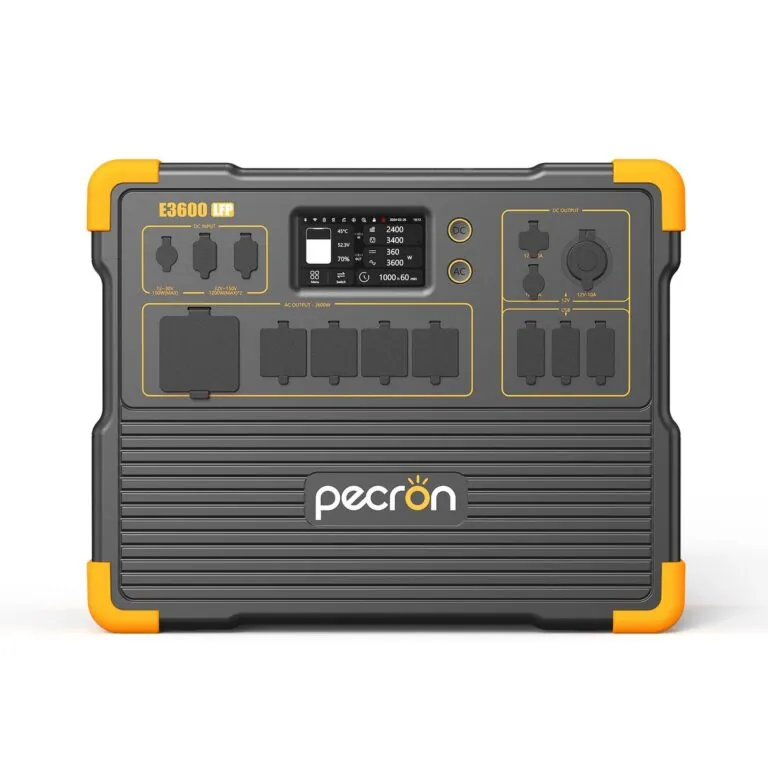
Competitor figures come from product pages and may vary by variant. See our F3000LFP and E3600LFP reviews.
Who should buy it, and who should skip it
Buy it if you want a 1 kWh station with plenty of ports, strong solar input and expansion, and your loads stay under 1,800 W.
Skip it if you need sustained surge power, a polished app, or a long standard warranty.
Questions people ask
How long does it take to charge?
About 80% in an hour from the wall at up to 1,000 W, per the brand and reviewers.
Can it be expanded?
Yes, up to 4,096 Wh with expansion batteries.
Can it power a space heater?
A 1,500 W heater is within the 1,800 W rating but will drain 1,024 Wh in well under an hour; plan accordingly.
My take and score
Research score: 8.0 / 10 (provisional)
Measured efficiency in the mid-80s percent, strong features and expandability, lowered for the surge test result, a limited app and its weight.
Researched from public evidence, not hands-on testing. Store and service problems are rated separately as the store risk. How scores work
Sources
- The Gadgeteer
- The Solar Lab
- Ryan Mercer
- Battery Skills
- Trustpilot: Pecron reviews (read October 6, 2026)
- Pecron product page (pecron.com)
- Brand overview: Pecron on Jensolnar